

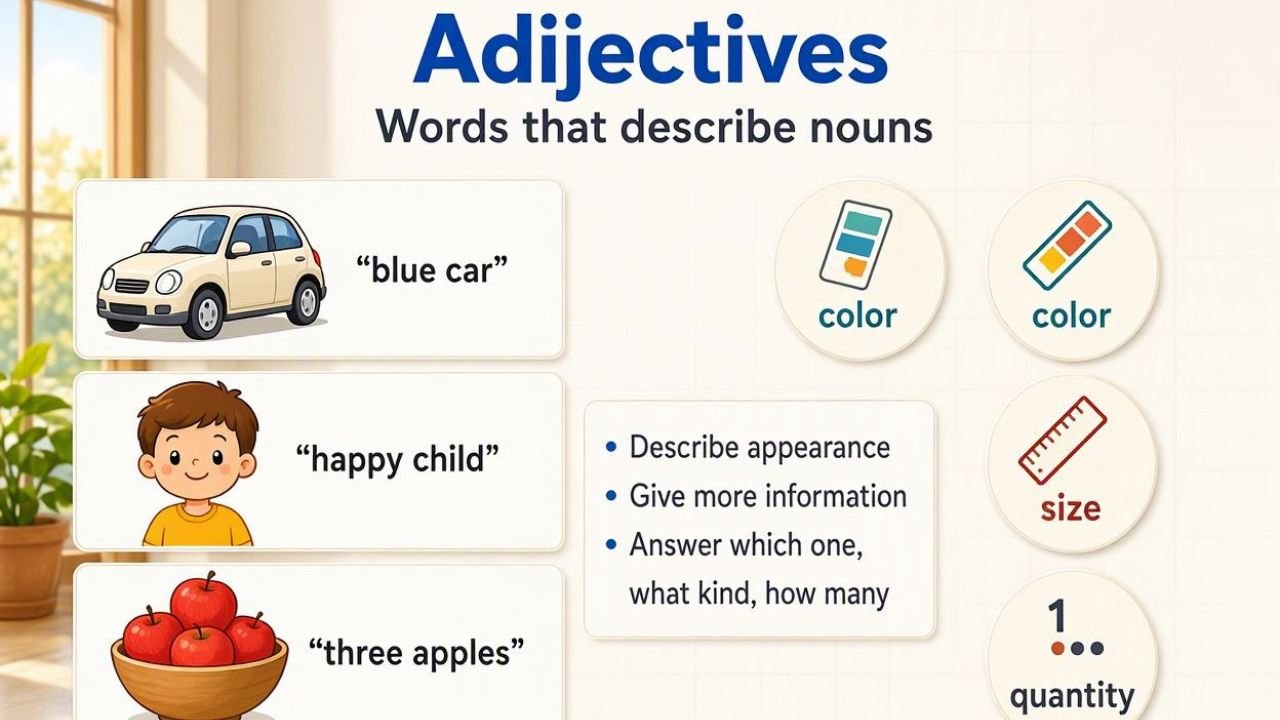
If you have ever wondered, is beautiful an adjective, the answer is yes. “Beautiful” is primarily an adjective because it describes a person, place, object, animal, idea, or experience. For example, we can say “a beautiful garden,” “a is beautiful an adjective voice,” or “a beautiful memory.”
The word does more than simply describe appearance. It can express qualities that people experience through sight, sound, emotion, character, or personal judgment. That flexibility makes “beautiful” one of the most useful descriptive adjectives in everyday English.
The Simple Answer: Is Beautiful an Adjective?
Yes,is beautiful an adjective is an adjective.
An adjective is a word that describes or modifies a noun or pronoun. It can tell us what something looks like, feels like, sounds like, or seems like. “is beautiful an adjective” performs this descriptive function very clearly.
Consider these examples:
- A beautiful flower grew beside the window.
- She wore a beautiful dress to the ceremony.
- We visited a beautiful village near the mountains.
- He has a beautiful voice.
- That was a beautiful moment.
In each example, “beautiful” gives additional information about another word. It tells us something about the flower, dress, village, voice, or moment.
Therefore, when someone asks is beautiful an adjective, the basic grammatical answer is straightforward: yes, it is a descriptive adjective.
What Does the Adjective “Beautiful” Describe?
The adjective can describe many different kinds of nouns. Its meaning depends on the context.
- Appearance: a beautiful woman, a beautiful painting
- Nature: a beautiful sunset, a beautiful forest
- Sound: a beautiful song, a beautiful voice
- Emotion: a beautiful feeling, a is beautiful an adjective memory
- Character: a beautiful person, a beautiful heart
- Experience: a beautiful journey, a beautiful moment
- Ideas: a beautiful idea, a beautiful solution
This broad usage is one reason the word appears frequently in both everyday conversation and formal writing.
Why Is “Beautiful” Called a Descriptive Adjective?
“Beautiful” belongs to the category commonly called descriptive adjectives or qualitative adjectives.
These adjectives describe a quality or characteristic rather than identifying a particular noun.
For example:
- beautiful
- intelligent
- generous
- peaceful
- difficult
- interesting
- expensive
In “a beautiful house,” the word “beautiful” describes a quality of the house. It does not tell us which house it is or how many houses there are.
How “Beautiful” Changes the Meaning of a Sentence
One useful way to understand is beautiful an adjective is to see what happens when the adjective is removed.
Compare these sentences:
- She bought a dress.
- She bought a beautiful dress.
The first sentence tells us what she bought. The second gives us additional descriptive information.
The adjective can also create a stronger emotional impression. - It was a day.
- It was a is beautiful an adjective day.
The noun “day” remains the same, but the adjective changes how the reader understands and imagines it.
Before a Noun
The most familiar position for “beautiful” is directly before a noun.
Examples include:
- a beautiful house
- a beautiful garden
- a beautiful child
- a beautiful painting
- a beautiful story
This is known as attributive adjective use.
After a Linking Verb
“Beautiful” can also appear after a linking verb such as “be,” “seem,” “look,” or “become.”
Examples:
- The garden is beautiful.
- Your painting looks beautiful.
- The city seems beautiful at night.
- The view became beautiful after sunset.
Here, “beautiful” still describes the subject. It simply appears in a different grammatical position.
This is called predicative adjective use.
Beautiful Before and After a Noun: Two Important Patterns
English adjectives can appear in different positions. “Beautiful” commonly follows two important patterns.
Pattern One: Adjective + Noun
This is the attributive pattern.
- a beautiful house
- a beautiful song
- a beautiful landscape
- a beautiful friendship
- a beautiful answer
The adjective comes before the noun it modifies.
Pattern Two: Subject + Linking Verb + Adjective
This is the predicative pattern.
- The house is beautiful.
- The song sounds beautiful.
- The landscape looks beautiful.
- Their friendship is beautiful.
- Her answer was beautiful.
In both patterns, the adjective has the same basic descriptive role.
A Simple Test
To identify the adjective, ask:
What word describes the noun or subject?
In “The garden is beautiful,” the word “is beautiful an adjective” describes the garden.
In “a beautiful garden,” it also describes the garden.
Therefore, the position changes, but its basic grammatical function remains.
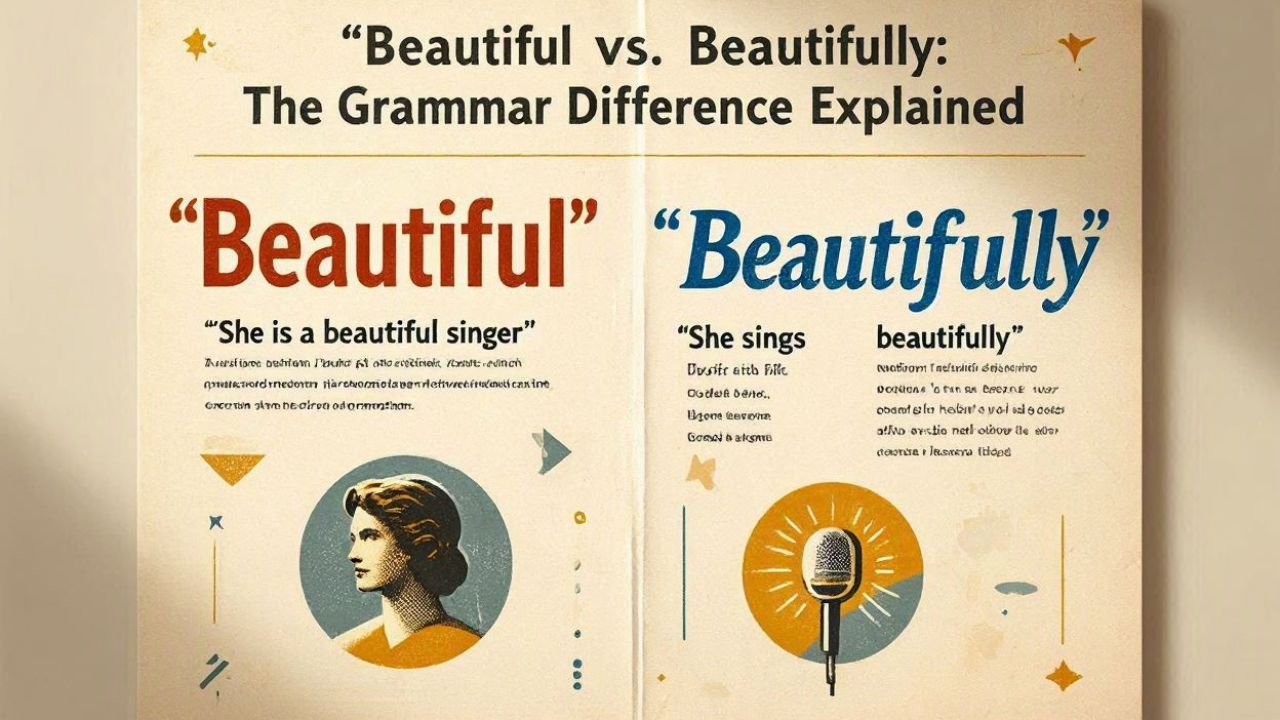
Beautiful vs. Beautifully: The Grammar Difference Explained
One of the most common mistakes involves confusing beautiful with is beautiful an adjective
Although they are related words, they do not normally perform the same grammatical job.
“Beautiful” is an adjective. “Beautifully” is an adverb.
An adjective usually describes a noun or pronoun. An adverb can describe a verb, adjective, or another adverb.
Compare:
- She is beautiful.
- She sings beautifully.
In the first sentence, “beautiful” describes “she.” In the second, “beautifully” describes how she sings.
Quick Comparison
| Word | Part of Speech | Main Function | Example |
| Beautiful | Adjective | Describes a noun or pronoun | She has a beautiful voice. |
| Beautifully | Adverb | Describes an action or manner | She sings beautifully. |
| Beauty | Noun | Names the quality | Her beauty was obvious. |
| The distinction becomes easier when you look at the word being described. |
When Should You Use “Beautiful”?
Use beautiful when describing a person, thing, place, idea, or experience.
- The flowers are beautiful.
- That is a beautiful story.
- You have a beautiful smile.
- It was a beautiful afternoon.
When Should You Use “Beautifully”?
Use beautifully when describing how an action happens.
- She danced is beautiful an adjective
- The artist painted the scene is beautiful an adjective
- The children performed beautifully.
- The machine works is beautiful an adjective
A simple trick is to ask whether you are describing a thing or an action.
If you describe the thing, “beautiful” may be appropriate. If you describe how something happens, “beautifully” may be appropriate.
Can Beautiful Be Used as a Comparative Adjective?
Yes. Like many descriptive adjectives, “is beautiful an adjective” has comparative and superlative forms.
The standard forms are:
- Positive: beautiful
- Comparative: more beautiful
- Superlative: most beautiful
Because “beautiful” is relatively long, English normally uses “more” and “most” rather than adding “-er” and “-est.”
Positive Form
The positive form describes one person or thing without making a comparison.
- This garden is beautiful.
- She has a beautiful voice.
- It is a beautiful painting.
Comparative Form
The comparative form compares two people or things.
- This garden is more beautiful than the other one.
- Her second painting is more beautiful than her first.
- The sunset today is is beautiful an adjective than yesterday’s.
Superlative Form
The superlative form identifies the highest degree within a group.
- This is the most beautiful garden in town.
- She created the most beautiful painting in the exhibition.
- That was the most beautiful sunset I have ever seen.
Why Not “Beautifuler”?
Learners sometimes wonder whether “is beautiful an adjective” is grammatically correct.
In standard modern English, more beautiful is the normal comparative form.
Similarly,is beautiful an adjective is preferred instead of “beautifulest.”
Therefore, these are the standard choices:
- beautiful
- more beautiful
- most beautiful
Beautiful as an Attributive and Predicative Adjective
A useful grammar distinction is whether an adjective is attributive or predicative.
“Beautiful” can normally be used in both positions.
Attributive Use
An attributive adjective appears directly before a noun.
Examples:
- a beautiful house
- a beautiful lake
- a beautiful photograph
- a beautiful memory
- a beautiful child
Here, “beautiful” is part of the noun phrase.
Predicative Use
A predicative adjective comes after a linking verb and describes the subject.
Examples:
- The house is beautiful.
- The lake looks beautiful.
- The photograph is beautiful.
- The memory remains beautiful.
- The child looks beautiful.
Both structures are standard English.
Why This Matters
Knowing both patterns gives you more flexibility when writing.
Instead of repeatedly writing:
- It was a is beautiful an adjectiveevening.
You can also write: - The evening was is beautiful an adjective
The meaning is similar, but changing the structure can make your writing sound less repetitive.

Can “Beautiful” Describe Things Other Than Appearance?
Absolutely. This is an important point for English learners.
Although “beautiful” often refers to physical appearance, it can describe many abstract qualities.
Consider these examples:
- a beautiful friendship
- a beautiful act of kindness
- a beautiful memory
- a beautiful idea
- a beautiful explanation
- a beautiful ending
- a beautiful gesture
Here, the word does not necessarily mean physically attractive.
Instead, it can communicate emotional value, elegance, goodness, harmony, or excellence.
Beautiful as an Emotional Description
English speakers often use the word to describe experiences.
- That was a beautiful moment.
- Your message was beautiful.
- Their reunion was beautiful.
- It was a beautiful expression of gratitude.
In these examples, “beautiful” communicates an emotional response rather than simply describing physical appearance.
Beautiful as a Description of Character
The word can also describe someone’s inner qualities.
- She has a is beautiful an adjective heart.
- He has a is beautiful an adjectivespirit.
- She is beautiful inside and out.
In such sentences, the word can suggest kindness, compassion, generosity, or emotional warmth.
What Is the Noun Form of Beautiful?
The common noun related to “beautiful” is beauty.
“Beauty” refers to the quality of being beautiful or something that possesses attractive qualities.
Compare:
- The garden is is beautiful an adjective
- The garden has great beauty.
In the first sentence, “is beautiful an adjective” is an adjective.
In the second sentence, “beauty” is a noun.
Examples of Beauty as a Noun
- The beauty of the landscape surprised us.
- She appreciated the beauty of the painting.
- Natural beauty can be found everywhere.
- His work celebrates the beauty of ordinary life.
The two words are closely related, but their grammatical roles differ.
Beautiful vs. Beauty
| Word | Part of Speech | Example |
| Beautiful | Adjective | The garden is is beautiful an adjective |
| Beauty | Noun | The garden has natural beauty. |
| This distinction is useful when building sentences correctly. |
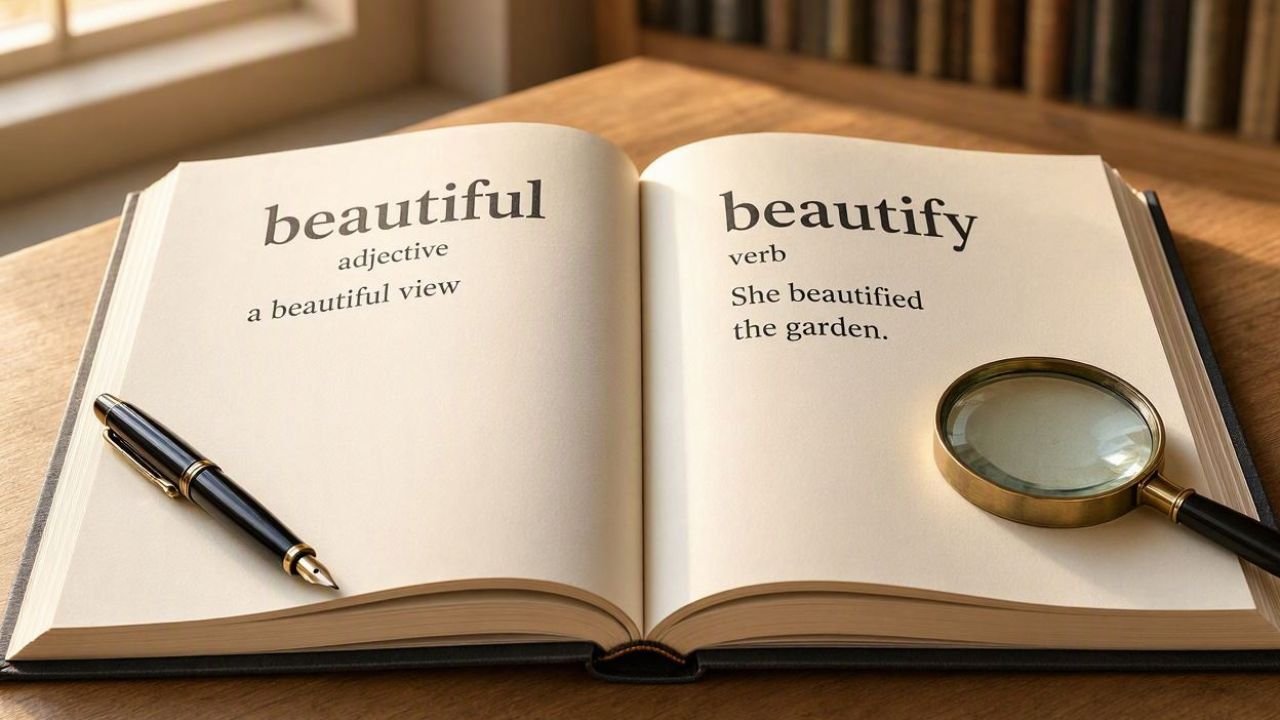
Does Beautiful Have a Verb Form?
There is no standard everyday verb formed directly from “is beautiful an adjective
This is an important distinction because English does not always create a verb from every adjective.
For example, “beautiful” is an adjective, while “beautify” is a verb related to the same word family.
The Verb “Beautify”
Beautify means to make something more is beautiful an adjective or attractive.
Examples:
- They planted flowers to beautify the entrance.
- The city plans to beautify the park.
- New artwork helped beautify the public space.
Therefore, the word family includes several related forms: - beauty — noun
- beautiful — adjective
- beautifully — adverb
- beautify — verb
- beautification — noun
Understanding this word family makes vocabulary development much easier.
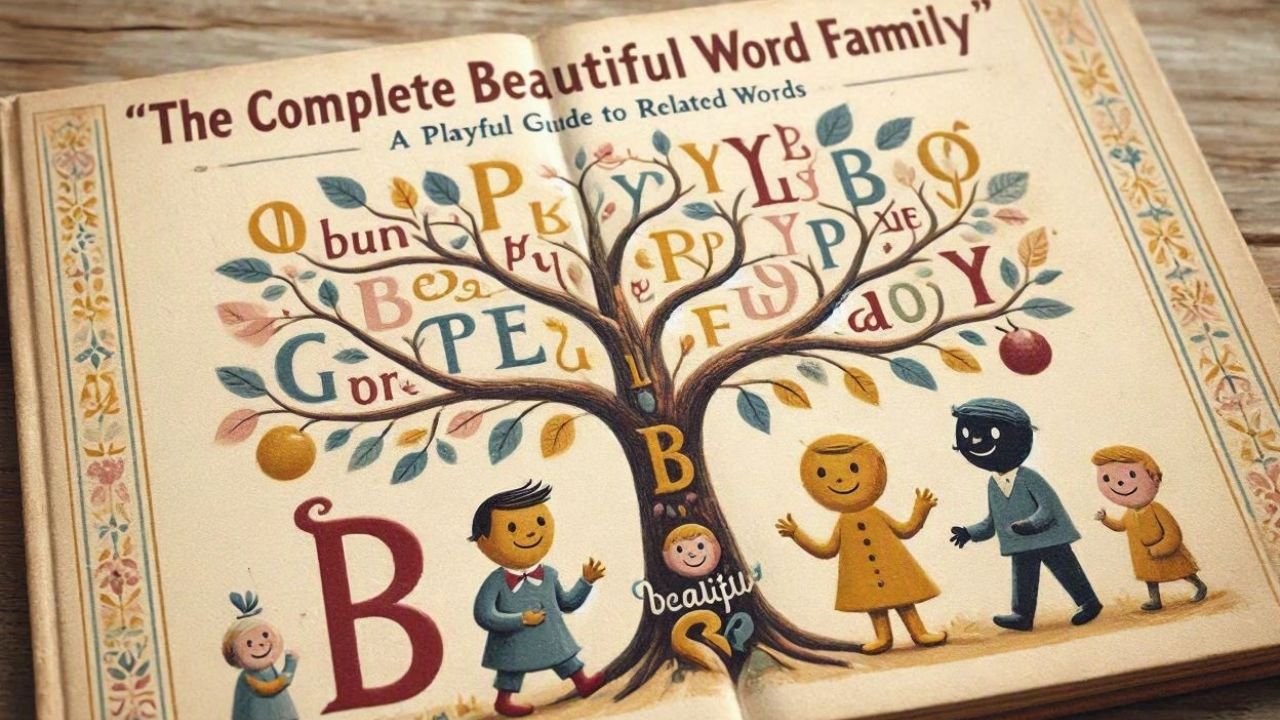
The Complete is beautiful an adjective Word Family
Learning related forms together can help you choose the correct word quickly.
Beauty
“Beauty” is a noun.
- The beauty of the ocean was unforgettable.
Beautiful
“Beautiful” is an adjective.
- The ocean looked is beautiful an adjective
Beautifully
“Beautifully” is an adverb.
- The sunset was beautifully captured in the photograph.
Beautify
“Beautify” is a verb.
- They planted trees to beautify the neighborhood.
Beautification
“Beautification” is a noun referring to the process of making something more attractive.
- The park underwent a major beautification project.
These forms are related, but they cannot simply replace one another.
What Are Common Synonyms for Beautiful?
English has many words that can replace “is beautiful an adjective but the best choice depends on context.
Common alternatives include:
- attractive
- lovely
- gorgeous
- stunning
- elegant
- pretty
- charming
- appealing
- magnificent
- breathtaking
- graceful
- delightful
However, these words do not always have exactly the same meaning.
Beautiful vs. Pretty
“Pretty” often describes something attractive or pleasing, especially in appearance.
- She has a pretty dress.
- The garden is pretty.
“Beautiful” can sound broader or more emotionally expressive. - The ceremony was is beautiful an adjective
- Their friendship is beautiful.
Beautiful vs. Gorgeous
“Gorgeous” often expresses a stronger reaction to appearance.
- She wore a gorgeous dress.
- The view was gorgeous.
However, “is beautiful an adjective is generally more flexible in formal and emotional contexts.
Beautiful vs. Stunning
“Stunning” suggests that something makes a strong impression.
- The building has a stunning design.
- The photograph is stunning.
Again, context determines which word sounds most natural.
What Is the Opposite of Beautiful?
The most direct opposite depends on the context.
Common possibilities include:
- ugly
- unattractive
- unpleasant
- unsightly
- ordinary
“Ugly” is the clearest general opposite when discussing physical appearance.
However, language can be more nuanced.
For example: - is beautiful an adjectiveappearance ↔ ugly appearance
- is beautiful an adjective experience ↔ unpleasant experience
- beautiful sound ↔ unpleasant sound
Therefore, there is not always one perfect opposite for every sentence.
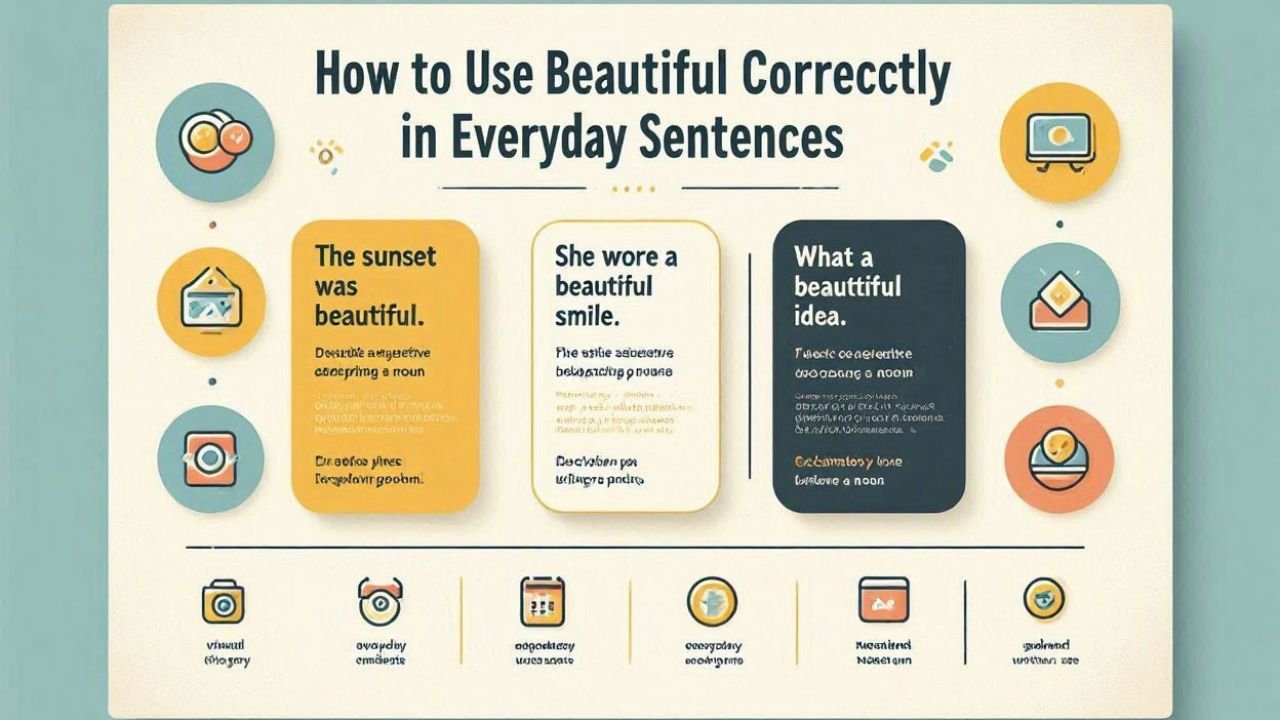
How to Use Beautiful Correctly in Everyday Sentences
The best way to understand is beautiful an adjective is to see the word working naturally in different sentence patterns.
Describing People
- She is beautiful.
- He has a beautiful smile.
- They have beautiful eyes.
- The bride looked beautiful.
Describing Places
- The beach is beautiful.
- We stayed in a is beautiful an adjective hotel.
- The mountain view was beautiful.
- They discovered a beautiful village.
Describing Objects
- That is a beautiful painting.
- She bought a is beautiful an adjective necklace.
- He designed a beautiful table.
- This is a is beautiful an adjective piece of art.
Describing Experiences
- It was a beautiful experience.
- We shared a beautiful moment.
- Their wedding was beautiful.
- The trip created beautiful memories.
Describing Ideas
- That is a beautiful idea.
- She gave a beautiful explanation.
- The book presents a beautiful message.
This range demonstrates why “beautiful” is more versatile than a simple appearance-related adjective.
12 Powerful Sentence Patterns With Beautiful
Learning sentence patterns can be more useful than memorizing isolated definitions.
Pattern 1: A Beautiful + Noun
- She bought a is beautiful an adjectivedress.
- They found a beautiful garden.
Pattern 2: Subject + Is + Beautiful
- The garden is beautiful.
- The painting is beautiful.
Pattern 3: Look + Beautiful
- You look is beautiful an adjective
- The flowers look beautiful.
Pattern 4: Beautiful + Abstract Noun
- It was a beautiful memory.
- They shared a beautiful moment.
Pattern 5: More Beautiful Than
- This place is more is beautiful an adjective than I expected.
Pattern 6: The Most Beautiful
- It was the most beautiful view on the trip.
Pattern 7: Beautiful to + Verb
- The place is is beautiful an adjective to visit.
Pattern 8: Beautifully + Verb
- She beautifully explained the idea.
Pattern 9: Such a Beautiful + Noun
- It was such a is beautiful an adjective evening.
Pattern 10: How Beautiful + Subject + Is
- How beautiful the garden is!
Pattern 11: Too Beautiful to + Verb
- The view was too is beautiful an adjective to ignore.
Pattern 12: Beautiful Enough to + Verb
- The painting was is beautiful an adjective enough to display publicly.
These structures make it easier to use the adjective naturally rather than forcing it into sentences.

Beautiful in Formal and Informal English
“Beautiful” works in both formal and informal English.
In everyday conversation, people frequently use it for compliments and personal reactions.
- You look beautiful.
- What a beautiful house!
- That was beautiful.
In formal writing, it can describe art, literature, nature, design, or abstract concepts. - The author creates a is beautiful an adjective contrast between the two characters.
- The architect developed a beautiful balance between light and space.
However, formal writing may sometimes benefit from a more precise adjective.
For example, instead of repeatedly saying “is beautiful an adjective” a writer might use: - elegant
- refined
- graceful
- impressive
- harmonious
- striking
Precision can make academic and professional writing stronger.
When “Beautiful” Becomes Too Repetitive
Although “beautiful” is grammatically correct, repeating it too often can weaken your writing.
Instead of writing:
- It was a beautiful morning.
- We saw a beautiful lake.
- The beautiful mountains looked is beautiful an adjective
You can vary your vocabulary: - It was a peaceful morning.
- We saw a breathtaking lake.
- The majestic mountains stretched across the horizon.
This does not mean you should avoid the word. Instead, use it when it communicates exactly what you mean.
Better Vocabulary Choices by Context
- Person: attractive, graceful, charming
- Design: elegant, refined, striking
- View: breathtaking, spectacular, magnificent
- Sound: melodious, soothing, harmonious
- Idea: thoughtful, elegant, compelling
- Experience: memorable, wonderful, meaningful
- Writing: graceful, vivid, moving
Using precise vocabulary makes your writing more expressive.
Is Beautiful an Adjective or an Adverb?
This question is easy to answer once you identify the word ending.
“is beautiful an adjective is an adjective.
“Beautifully” is an adverb.
Compare:
- The painting is is beautiful an adjective
- The artist painted it beautifully.
The first word describes the painting. The second describes the manner of painting.
A Helpful Grammar Test
Look at the word immediately connected to the description.
If the word describes a noun, an adjective may be needed.
If it describes how an action occurs, an adverb may be needed.
Examples:
- She is beautiful. → adjective
- She sings beautifully. → adverb
- It is a beautiful song. → adjective
- She performed the song beautifully. → adverb
This simple test solves many common grammar problems.
Is “Beautifully” Ever Used Without a Verb?
“Beautifully” is still an adverb, even when the sentence structure is short.
For example:
- Everything worked beautifully.
- The plan turned out beautifully.
- The colors blend beautifully.
In each case, the adverb modifies the way something happens or develops.
By contrast: - The result is is beautiful an adjective
Here, “beautiful” is an adjective because it describes “result.”
Can Beautiful Be Used After “Feel”?
Yes, but context matters.
With linking or sensory verbs, adjectives can describe the subject.
Examples:
- I feel beautiful.
- The fabric feels beautiful.
However, native speakers may choose more specific words depending on the intended meaning.
For example: - The fabric feels soft.
- The music feels peaceful.
The important grammar principle is that certain verbs can function as linking verbs. In those cases, an adjective can follow them.
Can You Say “Very Beautiful”?
Yes. “Very beautiful” is grammatically correct.
“Very” is an adverb that modifies the adjective “beautiful.”
Examples:
- She has a very beautiful voice.
- The garden is very beautiful.
- It was a very beautiful evening.
However, writers should avoid relying on “very” too frequently.
Instead, you can sometimes choose a stronger adjective: - very beautiful → breathtaking
- very beautiful → stunning
- very beautiful → gorgeous
- very beautiful → magnificent
The better choice depends on context and tone.
Can You Say “More Beautiful” and “Most Beautiful”?
Yes.
These are the standard comparative and superlative forms.
Use more beautiful when comparing two things:
- This painting is more beautiful than that one.
Use most beautiful when comparing three or more things or identifying the highest degree: - This is the most beautiful painting in the gallery.
Avoid unnecessary double comparison such as: - more beautifuller
- most beautifulest
Those forms are not standard English.
Does Beautiful Have Different Meanings?
Yes. The basic idea remains positive, but the exact meaning can shift according to context.
It can mean:
- pleasing to look at
- pleasing to hear
- emotionally moving
- admirable
- elegant
- excellent
- harmonious
For example, “a beautiful song” can refer to its sound, while “a beautiful person” might refer to appearance or character.
Context determines the intended sense.
Beautiful as a Compliment
“Beautiful” is frequently used as a compliment.
Examples include:
- You look beautiful today.
- You have a beautiful smile.
- That was a beautiful performance.
- You have a beautiful heart.
However, the social meaning depends on the situation.
When describing someone’s appearance, “beautiful” is generally a personal compliment. When describing someone’s actions, it can express admiration for their kindness or effort.
More Meaningful Alternatives
If you want your compliment to sound more specific, mention the quality you admire.
- Your kindness is inspiring.
- Your smile is warm and genuine.
- Your work is incredibly elegant.
- Your voice is soothing.
Specific compliments often feel more sincere than repeating a general adjective.
15 Original Examples Using Beautiful
These examples demonstrate different grammatical and contextual uses.
- The beautiful garden attracted visitors throughout the afternoon.
- Her grandmother gave her a beautiful necklace.
- The mountain looked beautiful after the rain.
- They shared a beautiful moment before saying goodbye.
- He wrote a beautiful message for his parents.
- The old building has a beautiful architectural design.
- Your idea is beautiful because it helps everyone.
- The singer has a beautiful voice.
- We watched a beautiful sunset beside the lake.
- Their friendship developed into something beautiful.
- The artist created a beautiful portrait.
- It was the most beautiful memory of my childhood.
- This version is more beautiful than the original.
- The bride looked beautiful during the ceremony.
- The story has a beautiful ending.
These examples show that the adjective can describe physical objects, people, emotions, ideas, and experiences.
10 Common Mistakes With Beautiful
Understanding mistakes can make grammar rules easier to remember.
Mistake 1: Calling Beautiful an Adverb
Incorrect:
- She sings beautiful.
Correct: - She sings beautifully.
Here, the word describes how she sings.
Mistake 2: Using Beautifully Before a Noun
Incorrect:
- a beautifully girl
Correct: - a beautiful girl
The noun “girl” needs an adjective.
Mistake 3: Using Beautifuler
Usually incorrect in standard English:
- beautifuler
Better: - more beautiful
Mistake 4: Using Beautifulest
Usually incorrect:
- beautifulest
Better: - most beautiful
Mistake 5: Confusing Beauty and Beautiful
Incorrect:
- She is beauty.
Correct: - She is beautiful.
“Beauty” is a noun, while “beautiful” is an adjective.
Mistake 6: Treating Every Use as Physical
“Beautiful” can describe emotions, ideas, actions, and experiences too.
Mistake 7: Repeating Beautiful Too Often
Use synonyms when the same adjective appears repeatedly.
Mistake 8: Ignoring Context
A word can be grammatically correct but stylistically weak. Choose vocabulary that matches the meaning.
Mistake 9: Using “Beautifully” After Every Verb
Not every action needs an adverb. Choose a word that accurately describes the action.
Mistake 10: Forgetting the Word Family
Knowing beauty, beautiful, beautifully, and beautify makes sentence construction easier.
A Quick Grammar Chart for Beautiful
| Question | Answer |
| Is beautiful an adjective? | Yes |
| What type of adjective is it? | Descriptive or qualitative adjective |
| What noun form is related to it? | Beauty |
| What is its adverb form? | Beautifully |
| What is its related verb? | Beautify |
| Comparative form | More beautiful |
| Superlative form | Most beautiful |
| Common opposite | Ugly |
| Can it come before a noun? | Yes |
| Can it come after a linking verb? | Yes |
| This chart provides a quick reference for students, writers, and English learners. |
How to Identify Beautiful in a Grammar Test
If you see “beautiful” in an English exam, do not identify its part of speech simply because of where it appears.
Instead, examine its function.
Step 1: Find What It Describes
Ask what word receives the description.
- beautiful house → describes “house”
- beautiful voice → describes “voice”
- beautiful idea → describes “idea”
Step 2: Determine the Word Category
If it describes a noun or pronoun, it is functioning as an adjective.
Step 3: Check the Sentence Structure
It may appear before a noun or after a linking verb.
- a beautiful painting
- the painting is beautiful
Step 4: Compare It With Related Forms
Do not confuse:
- beauty → noun
- beautiful → adjective
- beautifully → adverb
- beautify → verb
This four-step process works well for grammar exercises.
Why English Learners Often Confuse Beautiful and Beautifully
The confusion is understandable because the words look almost identical.
The ending -ly often signals an adverb in English.
Compare:
- careful → carefully
- quick → quickly
- beautiful → beautifully
However, the presence of “-ly” changes the grammatical role.
Consider: - She looks beautiful.
- She sings beautifully.
The first sentence describes “she.” The second describes “sings.”
This difference is more important than simply memorizing definitions.
Beautiful in Questions and Exclamations
The adjective also appears naturally in questions and exclamatory sentences.
Examples:
- How beautiful is this place?
- Isn’t that beautiful?
- What a beautiful view!
- How beautiful the flowers are!
- Wasn’t the ceremony beautiful?
These structures are common in everyday speech and expressive writing.
Exclamatory Pattern
A common structure is:
What + a/an + adjective + noun!
For example:
- What a beautiful day!
- What a beautiful painting!
- What a beautiful surprise!
This pattern is especially useful when expressing strong emotion.
Beautiful in Creative Writing
Writers often use “beautiful” to create emotional imagery.
For example:
- The beautiful morning light entered through the window.
- She remembered the beautiful summers of her childhood.
- A beautiful silence settled over the room.
However, strong writing does not depend on adjectives alone.
Instead of simply saying: - The sunset was beautiful.
A writer can create an image: - The sunset painted the quiet water with layers of orange and gold.
The second sentence gives the reader specific visual information.
Therefore, “beautiful” is useful, but descriptive detail can make writing more vivid.
How to Make Sentences With Beautiful More Specific
If you want stronger writing, combine the adjective with a precise noun.
Compare:
- a beautiful place
- a beautiful coastal village
The second phrase gives more information.
You can also add sensory details: - a beautiful garden filled with jasmine
- a beautiful song with soft piano notes
- a beautiful painting of a quiet village
Specific nouns and details reduce repetition while keeping the sentence natural.
Can Beautiful Describe an Action?
Usually, “beautiful” describes the person, thing, result, or experience associated with an action rather than the manner of the action itself.
For example:
- She gave a beautiful performance.
Here, “beautiful” describes the performance.
If you want to describe how she performed, use the adverb: - She performed beautifully.
This distinction is one of the clearest ways to understand the difference between an adjective and an adverb.
Can Beautiful Describe an Idea?
Yes.
English speakers commonly use “beautiful” for ideas that seem elegant, thoughtful, meaningful, or emotionally powerful.
Examples:
- That is a beautiful idea.
- She offered a beautiful solution to the problem.
- The book presents a beautiful philosophy.
In these sentences, the adjective does not describe physical appearance. Instead, it expresses appreciation for the quality of an idea.
Can Beautiful Describe a Person’s Personality?
Yes, especially when the context makes the meaning clear.
Examples:
- She has a beautiful personality.
- He has a beautiful heart.
- She is a beautiful person inside and out.
These expressions often refer to kindness, compassion, generosity, honesty, or warmth rather than physical appearance.
This broader meaning is important because adjectives can develop figurative uses over time.
Can Beautiful Describe a Sound?
Yes.
Examples:
- She has a beautiful singing voice.
- The violin produced a beautiful sound.
- The birds made beautiful music.
Here, “beautiful” describes how pleasing the sound is to the listener.
Again, the adjective does not have to describe something visible.
Can Beautiful Describe a Place?
Yes, and this is one of its most common uses.
Examples:
- a beautiful beach
- a beautiful city
- a beautiful forest
- a beautiful village
- a beautiful garden
The adjective can refer to appearance, atmosphere, architecture, nature, or the overall experience of being there.
Can Beautiful Describe a Memory?
Yes.
This is a common figurative use.
- That is a beautiful memory.
- We created beautiful memories together.
- She often thinks about those beautiful childhood memories.
Here, “beautiful” suggests that the memory is emotionally positive or meaningful.
Can Beautiful Be Used With “Very”?
Yes.
The phrase “very beautiful” is grammatically acceptable.
Examples:
- The flowers are very beautiful.
- She painted a very beautiful picture.
- It was a very beautiful evening.
Still, strong writing often benefits from more precise vocabulary.
Instead of using “very beautiful” repeatedly, consider: - stunning
- breathtaking
- exquisite
- magnificent
- elegant
The best option depends on what exactly makes something beautiful.
Can Beautiful Be Used With “Really”?
Yes.
“Really beautiful” is common in informal English.
Examples:
- This place is really beautiful.
- That was a really beautiful performance.
- Your message was really beautiful.
“Really” works as an intensifier here.
However, in formal writing, a more precise adjective can sometimes communicate the idea more effectively.
Can You Use Beautiful With Every Noun?
No.
Although “beautiful” is flexible, it does not naturally fit every noun.
For example:
- a beautiful painting → natural
- a beautiful garden → natural
- a beautiful friendship → natural
But a technical noun may require a more precise adjective.
Instead of: - a beautiful calculation
you might mean: - an elegant calculation
Similarly: - beautiful solution
may work when discussing elegance or simplicity, while “effective solution” may be better when discussing results.
Good vocabulary depends on meaning, not just grammar.
Beautiful in Academic Writing
In academic writing, “beautiful” can be grammatically correct, but writers should consider whether it is precise enough.
For example:
- The author presents a beautiful argument.
This may be understandable, but depending on context, these alternatives could be clearer: - compelling argument
- elegant argument
- convincing argument
- well-structured argument
Academic writing generally benefits from precise descriptions.
However, “beautiful” can still be appropriate in discussions of art, literature, design, aesthetics, mathematics, or philosophy.
Beautiful in Professional Writing
Professional writing usually favors clarity over emotional exaggeration.
For example:
- The team developed a beautiful solution.
This might sound enthusiastic but vague.
A more specific version could be: - The team developed an elegant solution that reduced processing time.
The second sentence tells the reader why the solution deserves praise.
Therefore, use “beautiful” when its meaning is clear and useful. Otherwise, choose a more precise adjective.
Beautiful in Literature and Poetry
Literary writing often uses “beautiful” differently from technical writing.
A poet may use it to create emotion, symbolism, or atmosphere.
Examples:
- a beautiful silence
- a beautiful sorrow
- a beautiful dream
- a beautiful ending
These expressions may be metaphorical.
That flexibility is one reason “beautiful” remains a powerful word in creative English.
15 Short Examples for English Learners
Here are additional simple examples:
- This flower is beautiful.
- She has beautiful eyes.
- We saw a beautiful lake.
- That is a beautiful story.
- Your house looks beautiful.
- The painting is beautiful.
- He wrote a beautiful poem.
- It was a beautiful morning.
- She gave me a beautiful gift.
- The children made a beautiful card.
- They visited a beautiful country.
- What a beautiful view!
- This is a beautiful memory.
- Her voice sounds beautiful.
- Their friendship is beautiful.
These examples show several common sentence patterns without complicated grammar.
A Practical Rule to Remember
If you remember only one rule, remember this:
Beautiful describes a person, thing, place, idea, experience, or quality. Beautifully describes how an action happens.
Compare:
- The dancer is beautiful.
- The dancer moves beautifully.
The first sentence describes the dancer. The second describes the movement.
This simple contrast answers many questions about the word’s grammatical function.
FAQs
Is beautiful an adjective?
Yes. “Beautiful” is a descriptive adjective because it describes a person, thing, place, idea, experience, or quality. For example, “a beautiful garden” uses the adjective to describe the noun “garden.”
Is beautifully an adjective?
No. “Beautifully” is normally an adverb. It can describe how an action happens. For example, “She sings beautifully” uses “beautifully” to describe the manner of singing.
What is the noun form of beautiful?
The main noun related to “beautiful” is beauty. For example, “The beauty of the landscape was breathtaking.” Here, “beauty” names the quality rather than describing the landscape.
What is the comparative form of beautiful?
The standard comparative form is more beautiful. For example, “This garden is more beautiful than the other one.” “Beautifuler” is not the normal standard form in modern English.
What is the superlative form of beautiful?
The standard superlative form is most beautiful. For example, “That was the most beautiful sunset I have ever seen.”
What is the opposite of beautiful?
The most direct general opposite is ugly, particularly when discussing physical appearance. However, the best opposite depends on context. “Unpleasant” may be more appropriate for an experience or sound.
Can beautiful describe a personality?
Yes. “Beautiful” can describe positive personal qualities when used figuratively. Expressions such as “a beautiful heart” or “a beautiful personality” can refer to kindness, compassion, warmth, or generosity.
Can beautiful describe an idea?
Yes. “Beautiful” can describe an idea that is elegant, meaningful, thoughtful, or especially pleasing. For example, “That is a beautiful idea” expresses appreciation for the idea rather than its physical appearance.
Conclusion
So, is beautiful an adjective? Yes. “Beautiful” is primarily a descriptive or qualitative adjective that tells us about the qualities of a noun or pronoun. It can describe physical appearance, sound, emotion, character, experiences, ideas, and many other qualities.
The word can appear before a noun, as in “a beautiful garden,” or after a linking verb, as in “the garden is beautiful.” Its standard comparative and superlative forms are more beautiful and most beautiful.
It is also important to separate “beautiful” from “beautifully.” The first is an adjective, while the second is an adverb. Likewise, “beauty” is a noun and “beautify” is a related verb.

1 thought on “9 happy ClearIs is Beautiful an Adjective? Grammar Facts You Should Know”