


Have you ever met someone who makes strangers feel welcome without even trying? The rare English word xenodochial describes this kind of friendliness toward unfamiliar people. It captures the spirit of hospitality, openness, and kindness that helps strangers feel comfortable in new surroundings.
Although this adjective rarely appears in everyday conversation, it has a fascinating linguistic history. Understanding its meaning can expand your vocabulary and help you describe welcoming personalities more precisely. Whether you are learning English, exploring unusual words, or improving your writing, this guide explains its definition, pronunciation, origins, synonyms, and practical usage.
What Does Xenodochial Mean? 5 Essential Facts
- Definition: Xenodochial is a rare adjective meaning friendly or hospitable toward strangers.
- Simple explanation: A xenodochial person welcomes unfamiliar people rather than treating them with suspicion or indifference.
- Part of speech: It functions as an adjective, so it describes a person, attitude, behavior, or atmosphere.
- Related concept: The noun xenodochy refers to the reception of strangers or the practice of hospitality.
- Opposite meaning: Xenophobic describes fear, dislike, or prejudice toward foreigners or unfamiliar people, although its precise meaning depends on context.
The word is unusual in modern English, and some dictionaries classify its historical use as rare or obsolete. Nevertheless, readers can still encounter it in literary, historical, and vocabulary-focused writing. Source: Wiktionary

How to Pronounce Xenodochial Correctly
- Phonetic spelling: ZEN-uh-DOH-kee-uhl is a helpful approximation.
- IPA pronunciation: /ˌzɛnəˈdoʊkiəl/ is one recorded pronunciation.
- Syllable breakdown: Xen-o-do-chi-al can help beginners approach the word, although natural pronunciation may combine the final sounds smoothly.
- Main stress: The strongest emphasis falls around the “DOH” syllable in the pronunciation shown above.
- Practice method: Say the word slowly first, then repeat it at a normal speaking pace.
- Listening tip: Use an established dictionary’s audio pronunciation when available to hear the sounds rather than relying only on spelling.
Because the word is uncommon, you may hear slight differences in pronunciation guides. The safest approach is to choose a reputable dictionary and follow its recorded version consistently.
7 Fascinating Facts About the Word Xenodochial
- Fact 1 — It is an adjective: The word describes a quality rather than naming a person, object, or action directly.
- Fact 2 — It concerns strangers: Its central meaning involves friendliness toward people who are not already familiar.
- Fact 3 — It has Greek roots: Its history connects it with the idea of receiving or welcoming strangers.
- Fact 4 — It is rare: Most everyday conversations use words such as welcoming or hospitable instead.
- Fact 5 — It has related vocabulary: Xenodochy and xenodochium belong to the same family of historically related terms.
- Fact 6 — It can describe an atmosphere: A writer can use the adjective for a welcoming community or environment.
- Fact 7 — It has a useful contrast: The word provides an interesting comparison with xenophobic, which expresses an opposing attitude toward outsiders.
These details make the word particularly useful for vocabulary enthusiasts, students, and writers who want a more precise way to discuss hospitality.

The Greek Origins Behind Xenodochial
- Historical roots: The word is connected with Ancient Greek vocabulary concerning strangers and hospitality.
- The Greek connection: Wiktionary traces the English adjective to Greek xenodokhē, meaning a banquet for strangers, combined with the English adjective-forming suffix -al.
- The broader linguistic idea: The related Greek element xenos is associated with a stranger, foreigner, or guest.
- A cultural connection: Welcoming visitors has held an important place in many societies, especially where travelers depended on others for shelter, food, and protection.
- Why the history matters: Understanding the original idea of receiving strangers makes the modern definition easier to remember.
The history of a word does not always match every modern use exactly. In this case, however, the historical connection to welcoming strangers provides a useful guide to its meaning. Source: Wiktionary
Xenodochial vs. Xenodochy vs. Xenodochium
These three words look similar, but they perform different grammatical roles. Understanding the distinction prevents confusion when reading historical texts or writing about hospitality.
| Word | Part of speech | Meaning | Example |
| Xenodochial | Adjective | Friendly to strangers | Her xenodochial manner welcomed visitors. |
| Xenodochy | Noun | Reception of strangers; hospitality | The account praised the host’s xenodochy. |
| Xenodochium | Noun | A historical guesthouse or institution for receiving strangers | The travelers sought shelter at a xenodochium. |
Use xenodochial when describing a person’s attitude or a welcoming quality.- Use xenodochy when discussing hospitality as a concept or practice.
- Use xenodochium when referring to a place associated with receiving guests, particularly in historical contexts.
The distinction is similar to the difference between hospitable, hospitality, and guesthouse. The words share a related theme, but they are not interchangeable.

10 Practical Examples of Xenodochial in Sentences
The clearest way to understand an unfamiliar adjective is to see how it works in context. The following original examples illustrate possible uses in descriptive, literary, and educational writing.
- Example 1: The xenodochial host welcomed every visitor with genuine warmth.
- Example 2: Her xenodochial nature helped newcomers feel comfortable at the community gathering.
- Example 3: The travelers remembered the village for its xenodochial spirit.
- Example 4: His xenodochial attitude made it easier for international students to settle in.
- Example 5: The story portrays a xenodochial innkeeper who offers shelter to weary strangers.
- Example 6: A xenodochial community treats unfamiliar visitors with courtesy and respect.
- Example 7: The professor used the rare adjective to discuss hospitality in historical literature.
- Example 8: Their xenodochial approach encouraged guests from different backgrounds to participate.
- Example 9: The writer described the old town as xenodochial because residents welcomed passing travelers.
- Example 10: A xenodochial greeting can make an unfamiliar environment feel less intimidating.
Writing tip: Because the adjective is rare, use it where precision or an unusual literary tone adds value. In ordinary messages, friendly, welcoming, or hospitable will usually sound more natural.
8 Useful Synonyms for Xenodochial
The best synonym depends on the sentence and the exact quality you want to express. Although no common word matches every shade of meaning perfectly, these alternatives communicate related ideas.
- Hospitable: Willing to welcome and accommodate guests.
- Welcoming: Making visitors or newcomers feel accepted.
- Friendly: Showing kindness and goodwill toward others.
- Cordial: Expressing warmth and politeness.
- Affable: Easy to talk to and pleasant in manner.
- Amiable: Having a pleasant, agreeable disposition.
- Genial: Cheerful, warm, and approachable.
- Openhearted: Showing sincerity, generosity, and emotional openness.
For most readers, hospitable is the closest everyday substitute when the sentence specifically concerns receiving strangers. Welcoming works especially well when describing an environment, organization, or community.
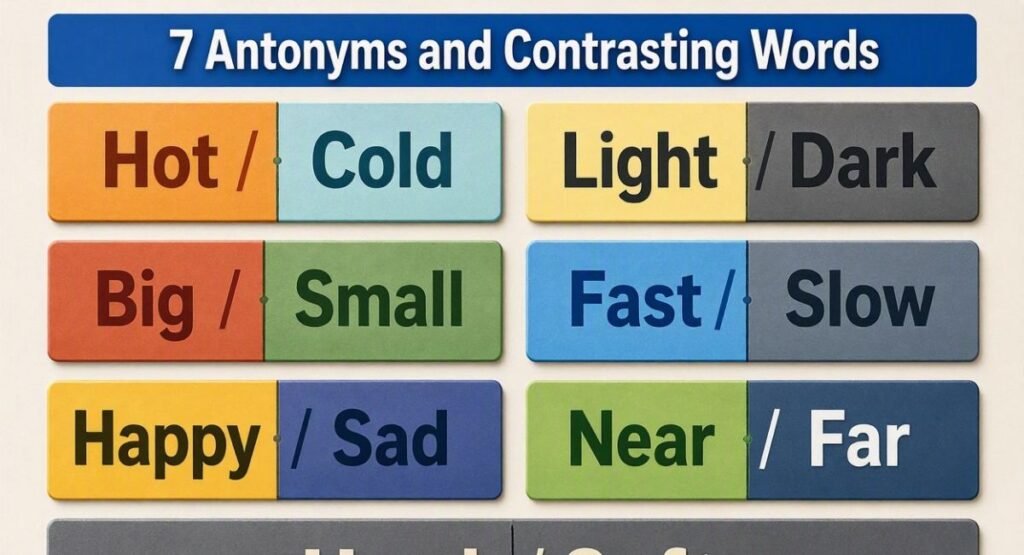
7 Antonyms and Contrasting Words
The opposite of a welcoming attitude can take several forms. Some words describe simple unfriendliness, while others imply fear or prejudice.
- Xenophobic: Showing fear, dislike, or prejudice toward foreigners or unfamiliar groups.
- Inhospitable: Unwelcoming or unsuitable for receiving guests.
- Unfriendly: Lacking warmth or goodwill.
- Hostile: Showing opposition, aggression, or antagonism.
- Unwelcoming: Making others feel unwanted.
- Aloof: Emotionally distant or detached.
- Unapproachable: Giving the impression that conversation or contact is unwelcome.
These words are not exact substitutes for one another. For instance, an aloof person may simply prefer privacy, while a xenophobic attitude involves a more specific negative response toward outsiders.
Where Can You Use Xenodochial in Modern Writing?
Although it is uncommon, the adjective can add precision to particular kinds of writing. The key is to choose a context where readers can understand its meaning from the surrounding sentence.
- Literary analysis: Describe a character who consistently welcomes strangers.
- Historical writing: Discuss hospitality traditions or the reception of travelers.
- Vocabulary articles: Explain rare English words and their linguistic relationships.
- Creative writing: Establish the personality of a generous innkeeper, village leader, or host.
- Academic discussion: Explore historical attitudes toward visitors, provided the term suits the source material.
- Descriptive essays: Characterize a community that welcomes newcomers.
- Language learning: Compare rare adjectives with familiar alternatives such as hospitable and friendly.
Avoid using the word merely to make a sentence sound sophisticated. A rare word is most effective when it communicates something accurately and fits the audience.
Xenodochial in Everyday Life: 10 Simple Examples
The concept behind this adjective is much more familiar than the word itself. People demonstrate hospitality through small actions that make unfamiliar individuals feel respected.
- At a workplace: A colleague introduces a new employee to the team.
- At school: A student helps a newcomer find the correct classroom.
- In a neighborhood: Residents greet a family that has recently moved in.
- At a social event: A host introduces guests who have never met.
- While traveling: A local resident offers clear directions to a visitor.
- In a community center: Volunteers welcome people attending for the first time.
- At a university: Students help international classmates understand campus routines.
- In a shop: Staff members treat unfamiliar customers with patience and courtesy.
- At a family gathering: Relatives make a guest feel included in conversations.
- In an online community: Members respectfully guide new participants through the group’s rules.
Each situation illustrates welcoming behavior. However, people would usually describe these actions as friendly or hospitable rather than use this rare adjective in conversation.
How Xenodochial Differs From Hospitality and Kindness
These ideas overlap, but each emphasizes a slightly different quality.
- Xenodochial: Focuses specifically on friendliness toward strangers.
- Hospitality: Emphasizes welcoming, hosting, or caring for guests.
- Kindness: Covers a broad range of considerate actions toward anyone.
- Friendliness: Highlights a warm and approachable manner.
- Generosity: Emphasizes willingness to give time, help, resources, or attention.
- Inclusiveness: Focuses on helping people feel accepted and involved.
For example, someone may be kind to close friends without being especially welcoming to strangers. Another person may provide excellent hospitality to visitors without being particularly outgoing. These distinctions help writers choose the most accurate description.
5 Common Mistakes to Avoid
Rare vocabulary can be difficult to use correctly, particularly when several related terms share the same word root.
- Mistake 1 — Treating it as a noun: It is an adjective. Write “a xenodochial host,” not “a xenodochial of hospitality.”
- Mistake 2 — Confusing it with xenophobic: These terms express contrasting attitudes toward strangers.
- Mistake 3 — Assuming it is common: The adjective is rare, so familiar alternatives may be clearer for general readers.
- Mistake 4 — Using it without context: Readers may not understand the word immediately. Add enough surrounding information to clarify the intended meaning.
- Mistake 5 — Confusing related words: Xenodochial describes a quality, xenodochy names a practice, and xenodochium refers to a place associated with receiving guests.
Correct usage depends on both meaning and grammar. When in doubt, consult a reputable dictionary and consider whether a simpler word would communicate the idea more effectively.

7 Easy Ways to Remember the Meaning
- Connect it with guests: Think of a person who welcomes someone they have never met.
- Remember the central idea: The key is friendliness toward strangers, not just general kindness.
- Learn the word family: Associate the adjective with xenodochy and xenodochium.
- Use a mental picture: Imagine a traveler arriving in an unfamiliar village and receiving a warm greeting.
- Create your own sentence: Write one example about a host, community, or newcomer.
- Compare it with xenophobic: One points toward welcoming strangers; the other refers to negative attitudes toward outsiders.
- Review it regularly: Revisit the word in a sentence after a day or two to strengthen recall.
A memorable association is more useful than repeatedly memorizing a dictionary definition. Linking the word with a familiar human experience makes it easier to recall when needed.
How to Use Xenodochial in Formal and Creative Writing
The adjective can be effective when the writing benefits from a distinctive, historically informed vocabulary. However, the audience should be able to understand the intended meaning.
- In a formal essay: “The author’s portrayal of a xenodochial community highlights the value of hospitality.”
- In a fictional story: “The xenodochial innkeeper offered the exhausted traveler a warm meal.”
- In a historical discussion: “The passage reflects an ideal of xenodochial conduct toward visitors.”
- In a character description: “Her xenodochial personality made strangers feel welcome.”
- In a vocabulary exercise: “Choose a synonym for xenodochial that fits the sentence.”
For general audiences, consider explaining the word when it first appears. For example, “The xenodochial host, known for welcoming strangers, greeted each traveler warmly.” This construction introduces the rare adjective and immediately clarifies it.
Is Xenodochial British or American English?
- Language status: It is an English adjective rather than a term restricted to one modern national variety.
- Regional use: Its rarity makes it unusual in both everyday British and American English.
- Spelling: The standard spelling is xenodochial.
- Pronunciation: Recorded pronunciations may vary slightly between speakers and dictionaries.
- Practical advice: Follow the dictionary or style guide appropriate to your intended audience.
It is more useful to think of this word as rare English vocabulary than as a typical British-versus-American spelling difference.
Is Xenodochial Still Used Today?
- Yes, but infrequently: The word remains documented in English reference sources.
- Historical relevance: It appears in discussions of older texts and historical attitudes toward hospitality.
- Literary value: Writers may use it to convey a specific meaning or create a distinctive tone.
- Educational value: It provides an interesting example of an adjective connected to hospitality and Greek-derived vocabulary.
- Everyday alternative: Most speakers would choose welcoming, hospitable, or friendly.
The fact that a word is rare does not mean it is meaningless or impossible to use. It simply means writers should consider whether their readers will understand it without assistance.
Related Words Worth Learning
The wider family of words associated with strangers and hospitality can help you recognize patterns in English vocabulary.
- Xenodochy: A rare noun meaning the reception of strangers or hospitality.
- Xenodochium: A historical term for a place or institution that received strangers, travelers, or guests.
- Xenophobia: Fear, dislike, or prejudice toward foreigners or unfamiliar groups.
- Xenophile: A person who is attracted to or has an interest in foreign cultures and people.
- Xenial: A rare adjective associated with hospitality, especially toward guests or strangers.
- Hospitality: The practice of welcoming and caring for visitors.
- Philoxenia: A Greek term associated with love of strangers or hospitality.
Related words do not necessarily have identical meanings. Check each definition before using it, especially in academic or historical writing.

Quick Comparison Table: Meaning, Grammar, and Usage
The following table provides a concise reference for readers who want to compare the most important terms.
| Term | Grammatical role | Main idea | Commonness in everyday English |
| Xenodochial | Adjective | Friendly to strangers | Very rare |
| Xenodochy | Noun | Reception of strangers | Very rare |
| Xenodochium | Noun | A place for receiving guests | Historical or specialized |
| Hospitable | Adjective | Welcoming to guests | Common |
| Hospitality | Noun | Welcoming and caring for guests | Common |
| Xenophobic | Adjective | Fearful or prejudiced toward outsiders | More widely recognized |
This comparison shows why the words should not be substituted for one another without considering their meaning. For ordinary communication, hospitable and hospitality will generally be the clearest choices.
FAQs
How do you pronounce xenodochial?
Xenodochial is pronounced approximately “ZEN-uh-DOH-kee-uhl.” One recorded IPA pronunciation is /ˌzɛnəˈdoʊkiəl/. Because the word is rare, listening to a dictionary recording can help you reproduce its pronunciation accurately.
What does xenodochial mean?
Xenodochial means friendly to strangers. It describes a welcoming attitude toward unfamiliar people, especially when someone makes visitors or newcomers feel comfortable. The word is a rare adjective, so hospitable and welcoming are more common alternatives.
What does xenodochy mean?
Xenodochy is a rare noun meaning the reception of strangers or hospitality. It refers to the practice or concept of welcoming unfamiliar people. The related adjective xenodochial describes someone or something characterized by that welcoming attitude.
Is xenodochial a positive word?
Yes. Its meaning is positive because it describes friendliness and hospitality toward strangers. A xenodochial host welcomes unfamiliar guests, while a xenodochial community makes newcomers feel accepted. The word does not, by itself, imply that someone must trust every stranger without caution.
What is the difference between xenodochial and xenophobic?
Xenodochial describes friendliness toward strangers, whereas xenophobic refers to fear, dislike, or prejudice toward foreigners or unfamiliar groups. The terms express contrasting attitudes. Remembering this distinction can help you use both words correctly in essays and vocabulary exercises.
Is xenodochial commonly used in conversation?
No. The word is rare in everyday conversation. Most people use friendly, welcoming, or hospitable to express the same general idea. However, the adjective can be useful in literary analysis, historical discussions, and articles about unusual English vocabulary.
What is a xenodochium?
A xenodochium is a historical term for a place or institution that received strangers, travelers, or guests. Depending on the historical context, it could refer to accommodation associated with hospitality or care for visitors. It is a noun, unlike the adjective xenodochial.
Can you use xenodochial to describe a place?
Yes. You can use it descriptively for a welcoming atmosphere, community, or setting. For example, “The village had a xenodochial character that made travelers feel at home.” Because the word is uncommon, a brief explanation may help general readers understand the sentence.
Conclusion
Xenodochial is a rare but meaningful English adjective that describes friendliness toward strangers. Its connection to hospitality gives it a distinctive place in vocabulary, literature, and historical discussions. By understanding its pronunciation, Greek roots, related terms, and sentence patterns, you can use it more confidently and accurately.
Although hospitable and welcoming are usually better choices for everyday communication, this unusual word offers a precise alternative when you want to describe the generous treatment of unfamiliar people. Remember its central meaning, distinguish it from xenophobic, and use it where it adds genuine clarity. Learning rare words such as this one can make your English vocabulary more expressive without sacrificing readability.

2 thoughts on “7+ Powerful Xenodochial Ways to Understand This Rare Word”